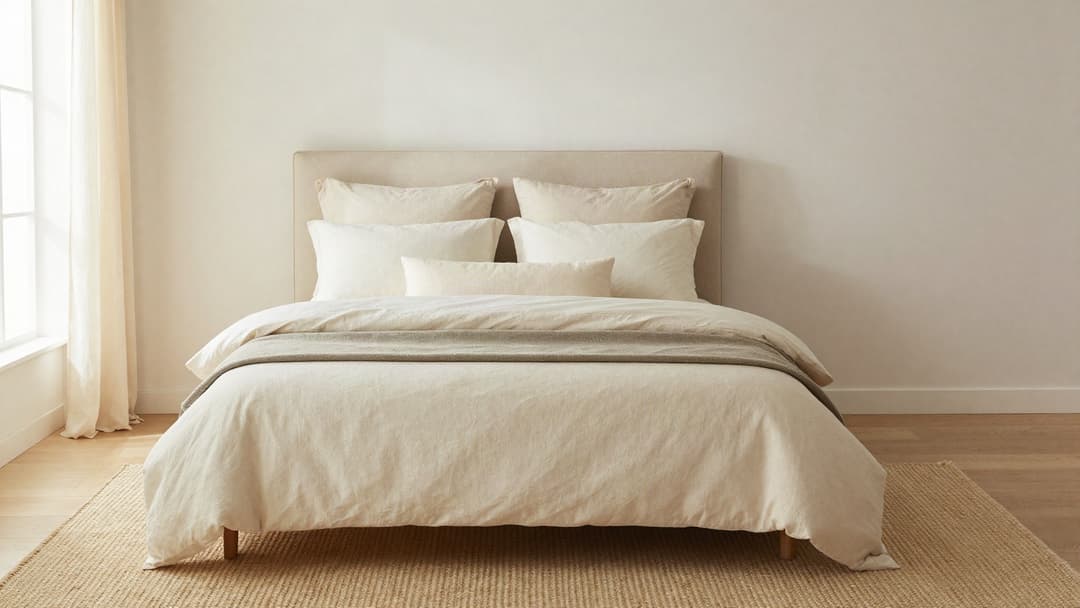
You bought the duvet cover you saw in the photo, new pillows and a couple of cushions, and the bed still doesn't look like that photo. It's almost never the brand or the budget: it's the measurements and the order of the layers. A bed is dressed in layers, each layer has a size that depends on the mattress, and one wrong layer is enough to make the whole thing look untidy.
These are the mistakes that come up most often when dressing a bed, why they happen and which rule fixes them. At the end I'll show you how to test the result before buying anything.
Mistake 1: a single row of pillows
The most common one, and the most visible. In the photos you like there are almost always two rows: the shams at the back, leaning against the headboard, and in front of them the pillows you actually sleep on.
The back row is what gives structure: it lifts the composition and fills the gap between the headboard and the duvet. That's why shams are bigger than sleeping pillows. The size depends on the width of the mattress: on King and Super King beds you need two of 50 × 90 cm, because two of 50 × 70 leave the width half covered. On a double or a Queen, two of 50 × 70 are enough.
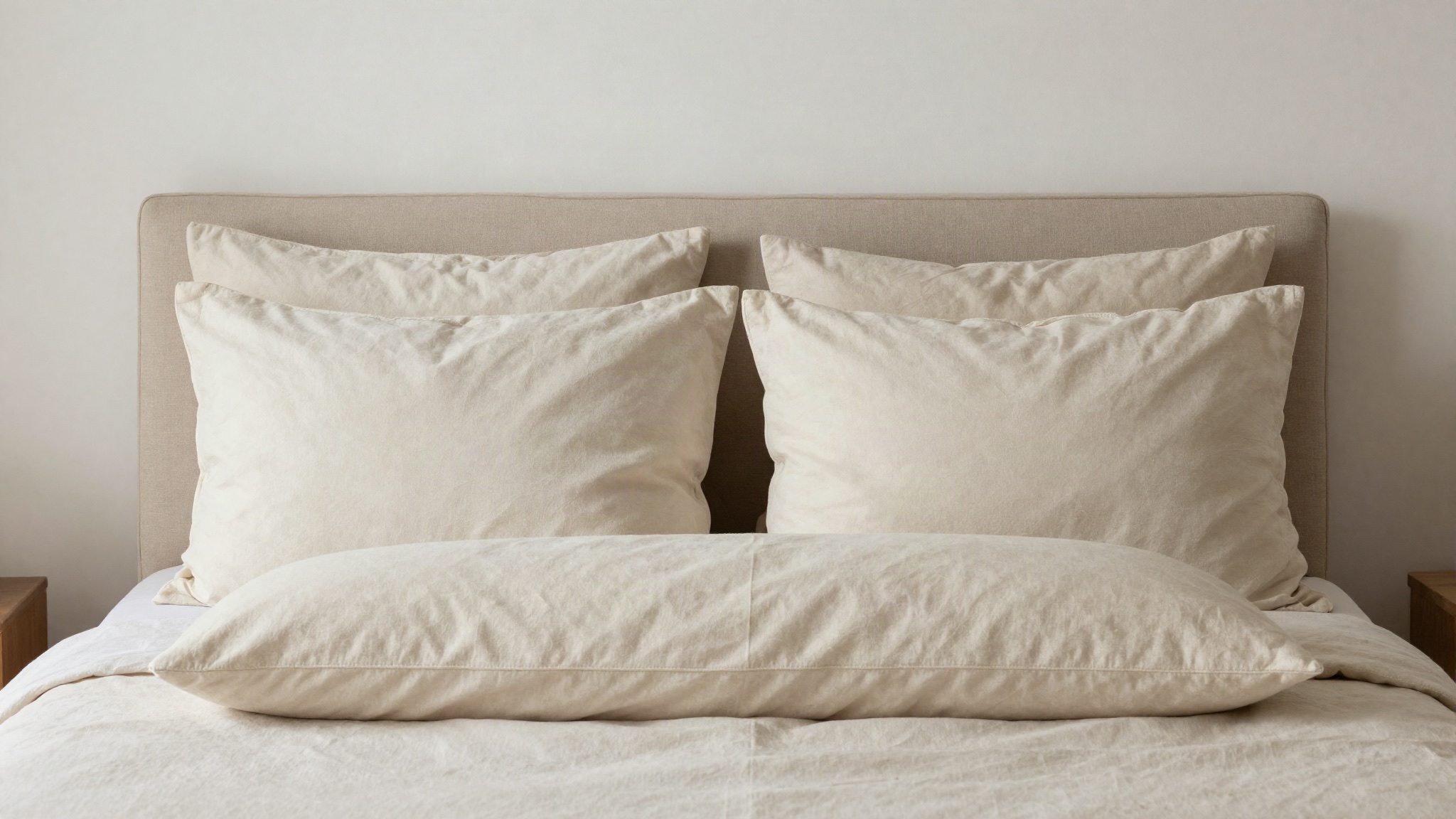
If your bed has a single row, it isn't missing "decoration": it's missing the layer that holds up everything else.
Mistake 2: cushions that leave a hole in the middle
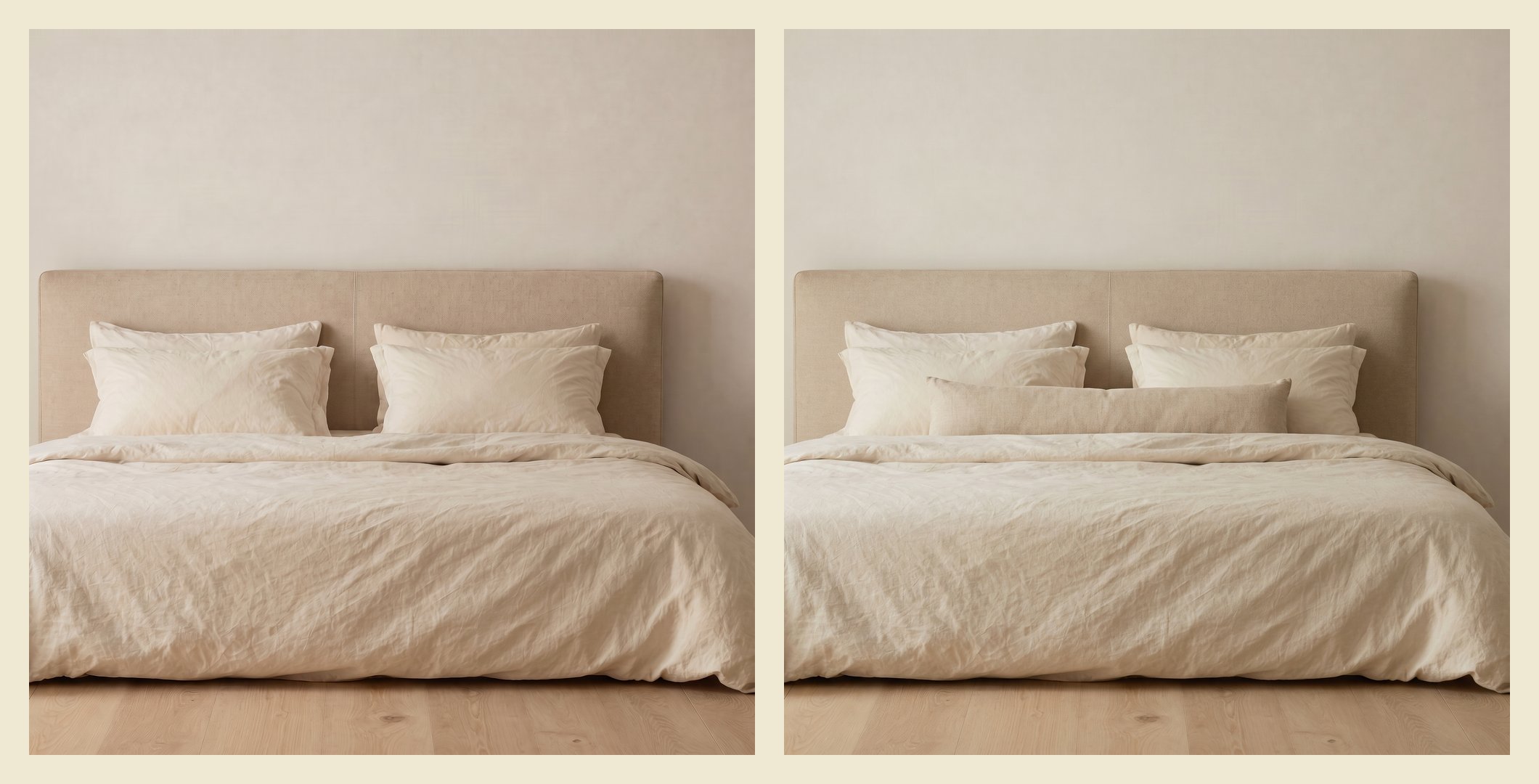
Two square cushions on a wide bed produce an odd effect: two lumps at the sides and a dip right in the middle, where the pillows meet. The eye reads it as unfinished, even if you can't say why.
The fix isn't more cushions, it's a different shape. On a double bed or larger, a long cushion of 55 × 110 cm across the centre closes that gap. The recipe that works on most beds is two cushions of 40 × 60 cm plus a long one in the middle. On single beds there's no hole to fill: one cushion of 40 × 60, 45 × 45 or 50 × 50 cm is enough.
Watch the other extreme, though. Stylists usually recommend between three and six cushions depending on the width of the bed. Past that, the bed stops looking dressed and starts looking occupied: you have to clear it before you can lie down.
Mistake 3: all one colour, or everything in contrast
When the duvet cover, the shams, the pillows and the cushions are all the same tone, the bed looks flat: nothing separates one layer from the next and it all reads as a single pale lump. When everything contrasts, the opposite happens: four colours fighting in the same square metre.
What works is a scale. The duvet cover is the base and sets the look. The shams at the back can carry a bit more character, because they're the backdrop of the composition. The pillows in front, on the other hand, are better kept in a calmer tone than the shams: that subtle difference is what creates depth. And the strong colour, if there is one, belongs in the cushions, which are the accent and the cheapest thing to swap when you get tired of it.

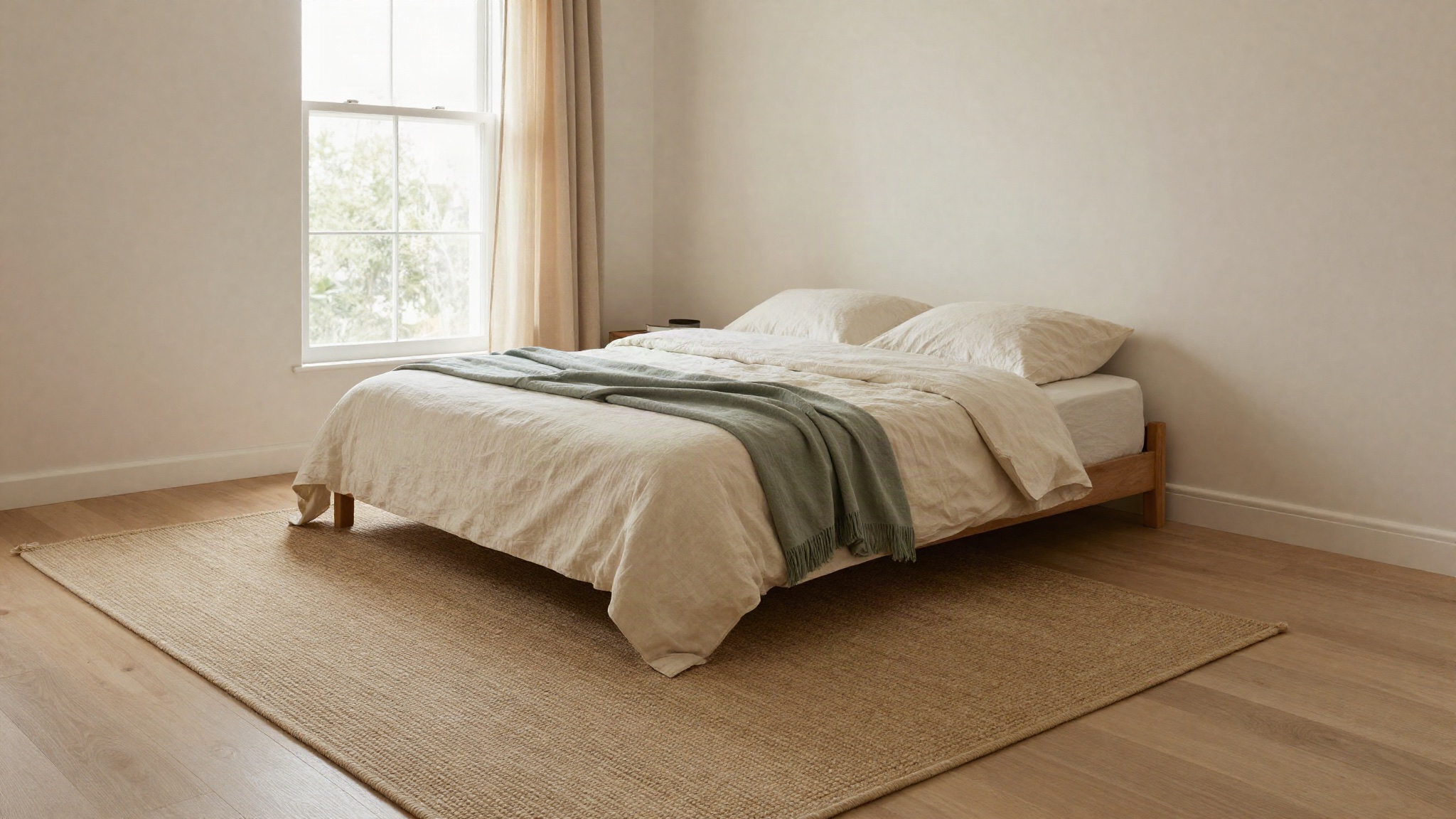
Mistake 4: the rug is too small
A small rug under a big bed makes the bed look like it's floating and the room look smaller than it is. It's the most expensive mistake to correct, because nobody replaces a rug on a whim.
The rule: the rug should extend 50 to 60 cm beyond each side of the bed, with its long side crossing the room. If it extends less than 20 cm at the sides it looks narrower than the bed, which is exactly the effect you're trying to avoid. For a Queen that means sizes from 150 × 200 cm up, and from 170 × 240 cm it clearly looks better. When in doubt between two sizes, take the bigger one: nobody has ever regretted that direction.
Mistake 5: the bed skirt doesn't match the base
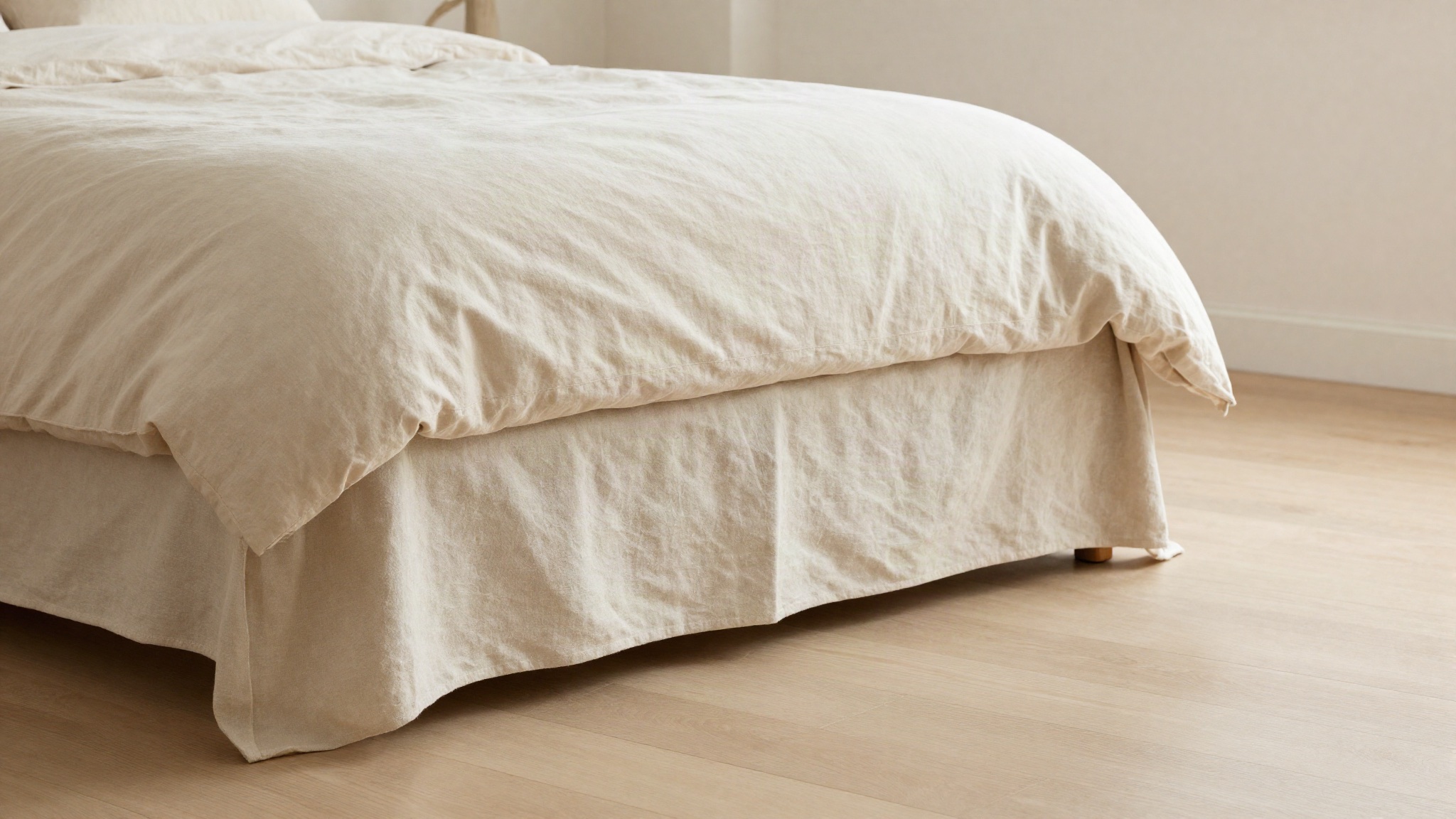
The bed skirt covers the base and the legs, so its height isn't a matter of taste: it's measured. It runs from the top edge of the base to the floor, and on most beds that's between 33 and 42 cm. A short skirt leaves the legs half showing and a long one creases against the floor; both show up immediately in a photo.
The material is a matter of taste: linen gives a relaxed look, creases included, and cotton a more classic, smooth one.
Mistake 6: treating the bed runner and the throw as the same thing
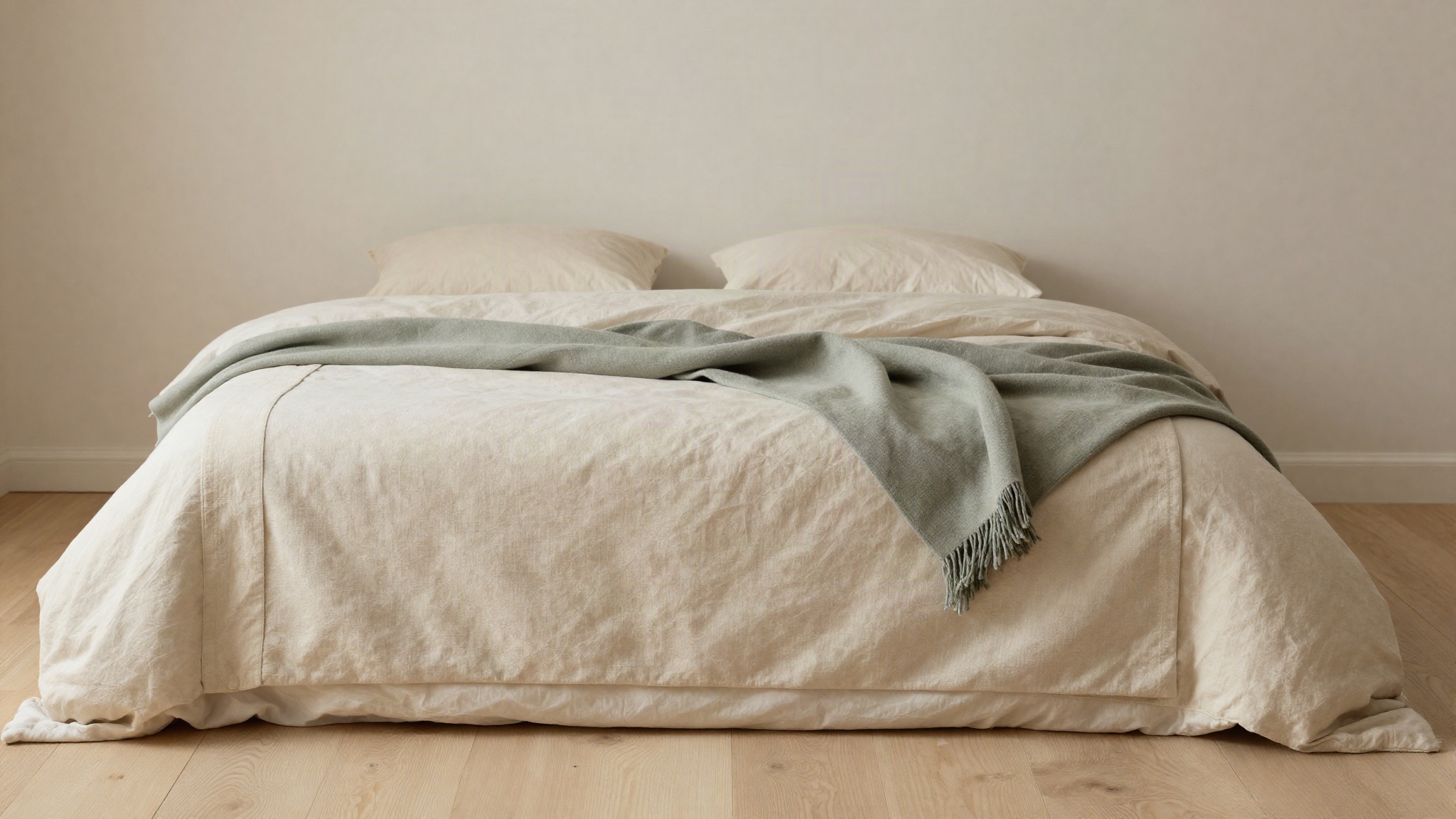
The bed runner goes at the foot, over the duvet, and does two jobs at once: it dresses that area and protects the duvet from daily use. For it to look right there should be around 10 cm to spare on each side; if it's tight or hanging, it shows. On a double bed the size that fits is 120 × 240 cm.
The throw is a different thing: it's texture and warmth, and it looks better loose or folded without too much neatness. It's worth insisting on this because it's the advice repeated most by people who dress beds to be photographed: layers look better with some movement, not perfectly pulled flat. An over-ironed bed looks like a shop window, not a bedroom.
Mistake 7: one single texture across the whole bed
Two pieces in the same colour but different materials look far better than two identical ones. So it's worth knowing what each fabric does before buying it:
- Cotton percale: cool and with body, it feels crisp. The most neutral of the three.
- Sateen: softer to the touch and with a slight sheen, most visible under side light.
- Linen: visible texture and a relaxed drape. The favourite for a natural style and the one that tolerates creases best, because they're part of the look.
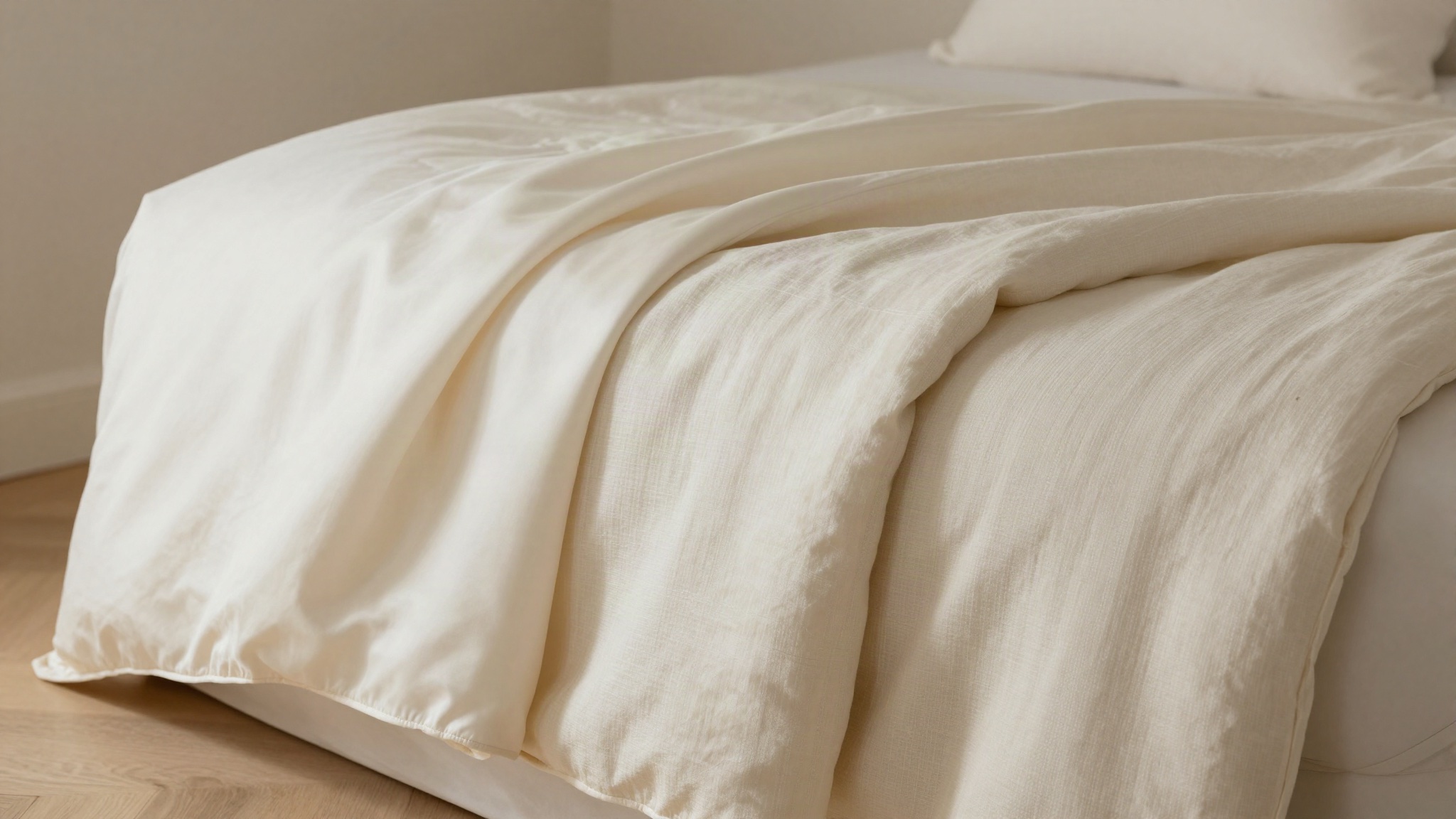
Mixing two of these textures on the same bed —a linen duvet cover with percale pillows, for instance— is the simplest way to make it look composed without adding a single colour.
How to test it before buying
All of the above makes sense when you read it, but you decide it by seeing it. That's why we built a tool to dress the bed layer by layer on screen, with real products: it's at kouzee.com/como-vestir-una-cama and works without an account.
It goes like this: you pick your bed size and from then on it only shows you what fits that size. If your bed is a Queen, you can't get the duvet cover or the shams wrong, because the sizes that don't apply never appear. You add layers in order —duvet cover, shams, pillows, cushions, bed runner, throw, skirt and rug— and the bed builds up on screen, with every piece drawn to real scale against the mattress. The estimated total stays at the bottom, so you always know what you're putting on the bed costs.
When you like how it looks, you can generate an image of the finished look and save everything into a Kouzee shopping list with quantities and total, to buy it in stages or show it to someone. The products come from La Blanquería, the store we built the tool with, which ships in Chile.
Where to see each piece with its price
If you'd rather look product by product, every category in the Kouzee catalog has its own view with price, stock and a link to buy:
- Bed linen, for the duvet cover.
- Pillows, for both rows.
- Cushions, including the long one in the middle.
- Bed runners and throws, for the foot of the bed.
- Bed skirts and rugs, the two layers almost nobody measures.
If this is part of a bigger project, the whole route is covered in the series on how to find ideas and how to organize what you save.
Frequently asked questions
How many cushions does a bed need?
On a double bed or larger, three: two of 40 × 60 cm and a long one of 55 × 110 cm in the middle. On a single bed, one is enough. Past six pieces on the bed, they get in the way more than they decorate.
Why does my bed look flat even with cushions on it?
Almost always because the back row is missing, or because there's too much of one tone. The shams leaning against the headboard are what give height, and a difference in colour between that row and the pillows in front is what creates the sense of depth.
How big should a bedroom rug be?
Ideally it extends 50 to 60 cm beyond each side of the bed, with the long side crossing the room. If you're torn between two sizes, take the bigger one.
Where do I find the exact measurements for my bed size?
The guide on how to dress a bed has a table with the duvet cover, shams, pillows, cushions, bed runner and rug that correspond to each size, from single to Super King.
Where to start
If your bed is already made and something's off, check the layers in this order before buying anything: are there two rows of pillows? is there something crossing the centre? does the rug extend half a metre on each side? Most beds that don't look like the photo fail on one of those three, and two of them are fixed with a single piece.
Then, before paying, build it on screen. Seeing the whole bed with the right measurements takes five minutes and saves you the purchase that arrives home and fits with nothing.